Slot-to-Table Credit Cascades Reshaping Progressive Reward Pools Worldwide

Slot-to-table credit cascades refer to systems where winnings, bonuses, and accumulated credits generated on slot machines transfer directly into live dealer table game environments and contribute to shared progressive reward pools that span multiple jurisdictions and operators. These mechanisms link digital reel outcomes with real-time table play, allowing credits earned during slot sessions to feed into jackpot structures that grow across roulette, blackjack, and poker variants. Data from multiple markets shows operators deploying these cascades to expand pool sizes while maintaining separate regulatory compliance frameworks in each region.
Mechanics Behind Credit Transfer Systems
Operators configure backend software so that a percentage of slot wagers and triggered bonuses route automatically into a central ledger that services both slot and table progressive meters. When players convert slot credits into table game buy-ins, the system registers those values as contributions that increment the shared prize pools. This process occurs in milliseconds through API connections between slot servers and table management platforms, ensuring that every eligible credit adds to the visible jackpot displays shown on both slot terminals and live dealer interfaces.
Regulatory filings indicate that platforms in North America began rolling out standardized transfer protocols in early 2025, while Asian and European operators followed with region-specific adaptations by the second quarter of that year. The result is a network where a single progressive pool can receive contributions from slot floors in Las Vegas and table sessions in Macau within the same accounting cycle.
Regional Adoption Patterns Through Mid-2026
North American markets report the highest integration rates, with several tribal and commercial casinos linking over 40 percent of their slot banks to table progressive systems by July 2026. Australian operators have introduced similar cascades under state gaming authority guidelines that require clear separation between contribution rates for domestic versus international players. European jurisdictions, including those licensed by the Malta Gaming Authority, have documented steady growth in cross-product pool participation since licensing updates took effect in 2025.
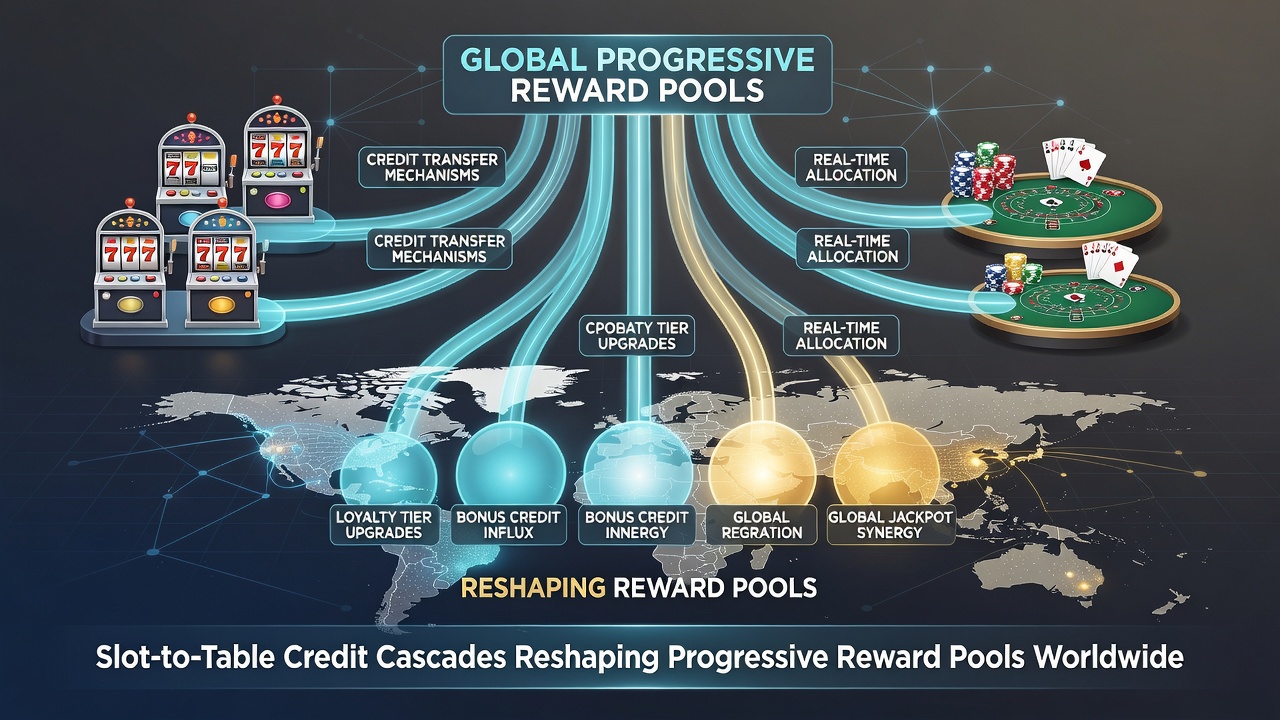
One documented implementation in a Canadian provincial gaming network shows that credit cascades increased average progressive pool values by 28 percent within six months of activation. Observers note that these pools now display higher baseline amounts because contributions arrive continuously from both slot and table activity rather than from isolated product categories.
Effects on Progressive Pool Dynamics
Progressive reward pools that receive slot-to-table credit inputs exhibit different growth curves compared with traditional single-product jackpots. Instead of spikes tied solely to slot play volume, these pools accumulate steady increments from table game rake and slot bonus conversions throughout each 24-hour period. Industry reports compiled by Gaming Laboratories International highlight that pool volatility decreases when contribution sources diversify, although peak payout events remain tied to random number generators that operate independently of the credit source.
According to Gaming Laboratories International analyses, operators using cascades have adjusted contribution percentages downward in some cases because the expanded player base supplies sufficient growth without higher per-wager deductions. This adjustment maintains regulatory caps on total prize liability while still delivering larger advertised jackpots to participants.
Technical and Compliance Considerations
Software providers must maintain audit trails that trace every credit movement from slot meter to table progressive ledger. Independent testing laboratories verify that transfer rules comply with local rules governing prize pooling and player fund segregation. Jurisdictions in South Africa and parts of Latin America have begun requiring real-time reporting interfaces so regulators can monitor cross-product contributions without accessing full transaction logs.
One study released by researchers at the University of Nevada, Reno examined data from three casino groups and found that cascade-enabled pools reached target thresholds 19 percent faster than non-cascaded equivalents during comparable traffic periods. The findings also noted that player session lengths on table games increased when credits originated from prior slot play, though the study stopped short of attributing causation.
Global Data Trends as of July 2026
Market intelligence aggregated from licensing bodies across multiple continents indicates that slot-to-table cascades now support progressive pools exceeding $500 million in aggregate value worldwide. Operators in Australia and Canada report that these interconnected systems account for a growing share of total jackpot payouts, particularly in the $1 million to $10 million range. European data providers have recorded similar patterns among remote and land-based licensees operating under unified progressive agreements.
What's notable is that the expansion has prompted several gaming associations to publish updated technical standards for credit routing and pool reconciliation. These standards address issues such as currency conversion when pools span borders and time-zone synchronization for contribution recording.
Conclusion
Slot-to-table credit cascades continue to integrate slot and table environments into unified progressive structures that operate across diverse regulatory landscapes. Available figures from licensing authorities and testing organizations show measurable increases in pool sizes and contribution diversity as adoption widens through 2026. The systems rely on established software protocols and independent verification processes that support ongoing expansion while meeting jurisdiction-specific requirements.