Sequential Credit Journeys: Mapping Free Play to Live Table Conversions

Free play credits often start in slot games where players accumulate wins that later convert toward table game access, and platforms track these movements through automated systems that adjust balances in real time. Operators set contribution rates so slot spins feed into overall wagering totals while live tables receive reduced percentages, which shapes how quickly credits move forward. Data from the Nevada Gaming Control Board shows these pathways operate under strict audit trails that log every credit shift from digital reels to dealer tables.
Core Mechanics Behind Credit Movement
Systems calculate bonus value by applying multipliers during the initial free play phase, then route remaining credits into live environments once players meet minimum spin thresholds. Players complete sequences of spins on designated machines before the platform unlocks table game eligibility, and the transition triggers automatically through backend software that verifies completed requirements. Industry reports from the Australian Communications and Media Authority indicate that contribution caps on table games limit how much live play can reduce remaining wagering needs, which forces many users to balance slot sessions with strategic table entries.
Conversion rules vary by provider yet follow consistent patterns where slot wins generate the bulk of transferable credits while live blackjack or roulette sessions draw down those balances at slower rates. Observers note that platforms display progress bars during play so users monitor exact amounts available for table transfers, and these displays update after each qualifying round.
Step-by-Step Transition Examples
One documented case involved a player completing 50 free spins on a progressive slot title, after which the system moved 180 credits into a live roulette lobby with a 20x wagering overlay still attached. The credits funded initial bets at the table until the sequence cleared, at which point any remaining balance became withdrawable under standard terms. Research from the University of Nevada, Reno gaming studies program reveals similar patterns across multiple operators where sequential bonuses extend playtime by linking slot activity directly to dealer tables without requiring separate deposits.
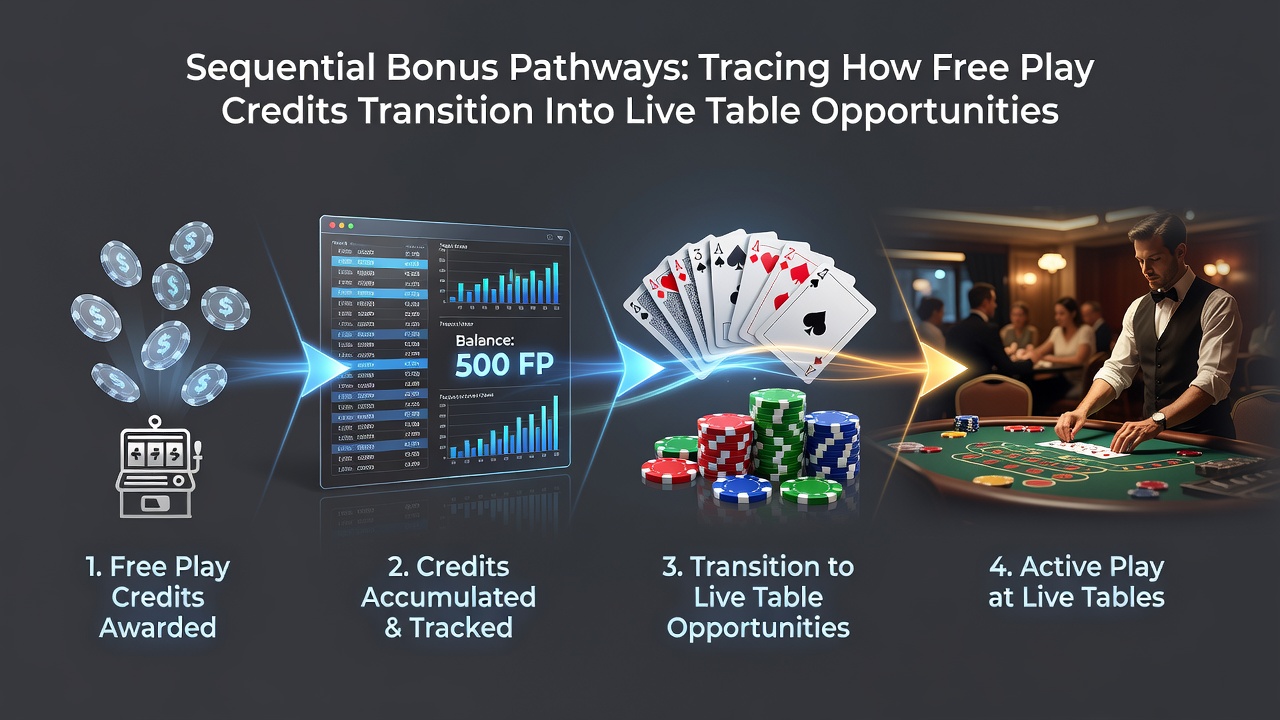
Another pathway appears when operators run limited-time events that double credit values earned from slots, then permit immediate transfers into live blackjack tournaments. Participants in these events often shift balances mid-session after hitting predetermined win multipliers, and the platform records each move to maintain compliance logs required by regional authorities. Figures released in August 2026 by the New Jersey Division of Gaming Enforcement highlighted a 14 percent rise in such hybrid sequences compared with the prior quarter, driven largely by mobile integrations that streamline the handoff process.
Regulatory Frameworks Across Regions
European regulators outside the UK enforce contribution caps that differ from North American standards, which affects how quickly free credits reach live tables. Canadian provincial bodies require operators to publish exact conversion percentages in advance, giving players clear visibility into slot-to-table ratios before they begin play. These rules create predictable pathways because platforms must display them in bonus terms, and any deviation triggers automatic audits.
Operators adjust internal algorithms to stay within these limits while maximizing player retention through seamless credit flows. Data compiled by the European Gaming and Betting Association demonstrates that clear disclosure of transition rules correlates with higher completion rates for bonus sequences, particularly when live table access opens after modest wagering thresholds.
Trends Observed Through Mid-2026
Platform analytics in August 2026 recorded increased mobile usage for bonus transitions, with users shifting credits from slots to live tables during short sessions rather than extended desktop play. Software updates introduced by major providers now allow partial credit transfers, letting players test table games without committing full balances. Industry white papers from the International Association of Gaming Regulators note that these partial options reduce drop-off rates during the conversion phase.
Live dealer integration continues to expand, and systems now support simultaneous tracking of slot progress alongside table eligibility. Players receive notifications when sufficient credits accumulate for table entry, which streamlines the overall experience without altering regulatory compliance.
Conclusion
Sequential bonus pathways operate through defined contribution rules and automated verification that move free play credits from slots into live table opportunities across multiple jurisdictions. Regional authorities maintain oversight through published rates and audit requirements, while platform technology handles the actual transfers in real time. Continued data collection through 2026 shows steady growth in these hybrid sequences as operators refine mobile tools and compliance features.