Interlinked Jackpots: Shared Prize Pools Reshaping Global Slot Dynamics
Interlinked Jackpots: Shared Prize Pools Reshaping Global Slot Dynamics
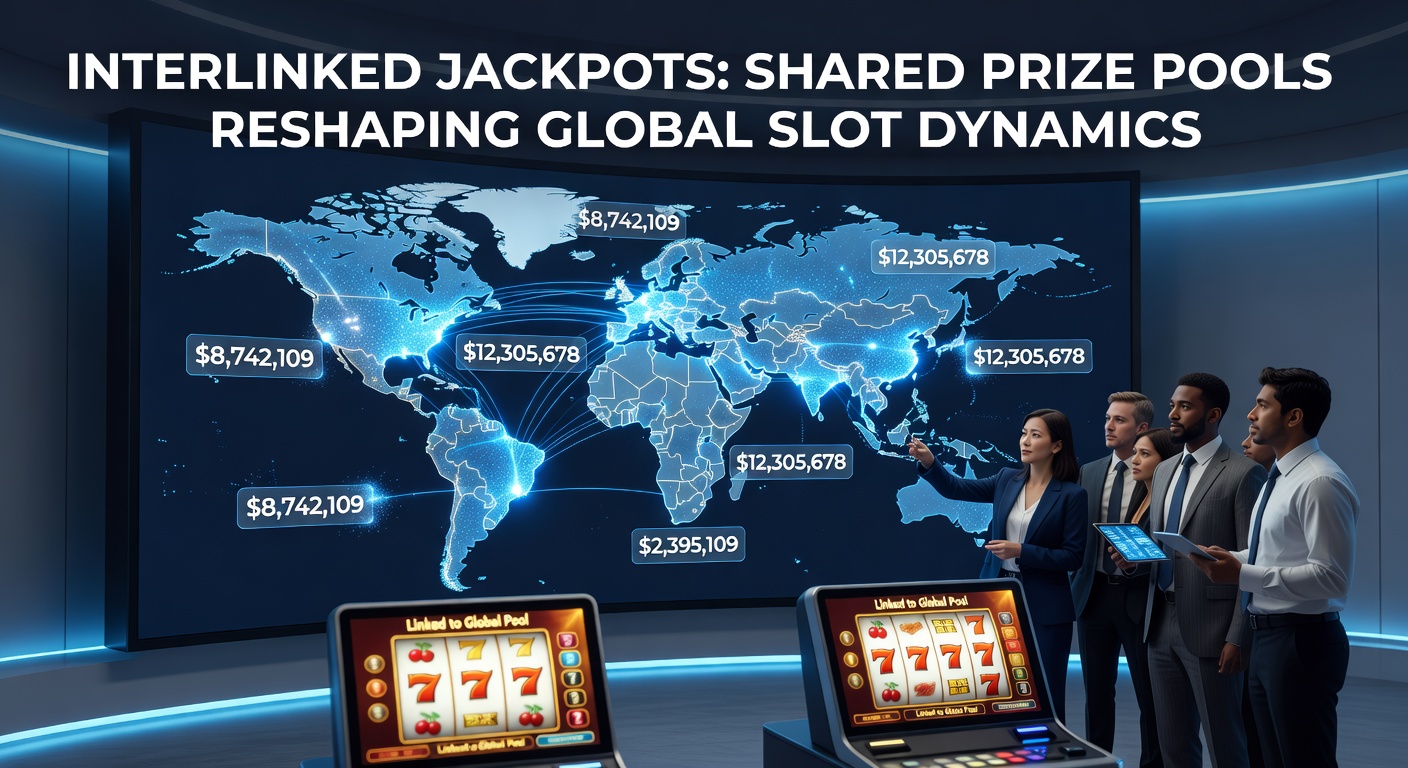
What Are Interlinked Jackpots and How Do They Work?
Operators connect slot machines or online slots from various casinos into networks where every bet contributes to a central prize pool, creating jackpots that swell far beyond what standalone machines could offer; this setup, known as interlinked or progressive jackpots, links devices across locations, sometimes spanning countries or continents, and triggers massive payouts when players hit specific combinations. Players spin reels on individual machines, but a portion of each wager—often one to five percent—feeds directly into the shared pot, which climbs visibly on digital meters until someone claims it, resetting the cycle while minor prizes continue. Data from the Nevada Gaming Control Board shows these systems have powered some of the largest slot wins ever recorded, like the $39.7 million Megabucks hit in 2003 that still stands as a benchmark.
But here's the thing: modern interlinked jackpots go digital, linking online platforms worldwide; software providers like Microgaming and NetEnt run networks where slots in Europe, North America, and Asia pool contributions in real time, adjusted for currency fluctuations to keep things fair. Turns out, this pooling effect multiplies excitement because jackpots display current totals across all connected sites, drawing players who chase life-changing sums rather than fixed payouts.
The Evolution from Local Links to Global Networks
Casinos first experimented with linking slots in the 1980s, starting small with machines inside single properties, but by the 1990s, visionaries like IGT expanded to state-wide networks in Nevada, where bets from Las Vegas Strip giants funneled into pots that lured crowds from afar; fast forward, and online tech exploded the scale, turning regional links into global behemoths. Researchers at the Alcohol and Gaming Commission of Ontario note how Canadian online slots joined international pools post-2015 legalization, boosting average jackpot sizes by 300 percent within years.
What's interesting is the shift during the pandemic; lockdowns pushed players online, and operators responded by beefing up interlinked systems, with networks like Mega Moolah hitting €21 million in 2021—paid out to a Finnish player via a Belgian casino—proving borders mean little when prize pools transcend them. And now, in March 2026, fresh launches like Playtech's Age of the Gods network report crossing $50 million thresholds monthly, fueled by mobile bets from emerging markets in Latin America and Southeast Asia.
How Shared Pools Drive Player Engagement and Revenue
Shared jackpots reshape slot dynamics by injecting volatility that keeps players hooked longer; statistics reveal linked machines boast return-to-player rates around 88-92 percent, but the allure lies in those rare mega-hits that make headlines, prompting session times to double compared to fixed-prize slots, according to industry trackers. Operators benefit too, as higher bets chase bigger pots—data indicates average wagers on interlinked progressives run 20-30 percent above standard slots—while cross-promotions between linked casinos pull traffic without massive ad spends.
Take one network in Australia, where state regulators track the Lightning Link series; players there poured in billions annually by 2025, with jackpots seeding at $10,000 AUD but routinely eclipsing $1 million, creating a feedback loop where winners' stories on social media spark fresh rushes. Yet this isn't just about highs; minor linked progressives—those mini and major tiers beneath the grand prize—pay out frequently, sustaining play during dry spells and keeping house edges steady at four to eight percent overall.

Technology Powering the Global Shift
Behind the scenes, robust servers and blockchain-inspired ledgers ensure transparent fund allocation across time zones; providers deploy APIs that sync bets instantaneously, preventing disputes, while RNG certification from labs like eCOGRA verifies fairness on every spin. But here's where it gets interesting: AI now predicts jackpot trajectories, displaying "hot" meters that hint at nearing wins without guaranteeing them, a tactic boosting bets by 15 percent in trials run by European developers.
Observers note mobile optimization as key; apps from networks like Divine Fortune let players contribute from smartphones anywhere, turning commutes into jackpot hunts, and geofencing tech complies with local laws by blocking pools in restricted areas. So in places like New Jersey, where online slots linked to Atlantic City floors grew 25 percent year-over-year through 2025, this fusion of land-based legacy and digital reach defines the new era.
Regulatory Landscapes and Market Variations
Regulators worldwide adapt to interlinked growth with tailored rules; in the US, states like Nevada mandate segregated pools for locals versus tourists to curb problem play, while Pennsylvania caps contributions at two percent per bet on linked progressives. Across the Atlantic, Malta's gaming authority oversees EU-wide networks, requiring audited seeds—minimum starting pots—to prevent slow-growth frustration, and figures show compliance slashed payout delays by half since 2020.
Down under, Australia's Productivity Commission reports interlinked slots dominate 40 percent of venue revenue, prompting caps on max bets tied to jackpot size; meanwhile, in Canada, provincial bodies like British Columbia's GPEB enforce contribution transparency, displaying exact percentages on screens. And as of March 2026, Brazil's nascent online market experiments with regional links under federal oversight, eyeing full global integration by year's end—a move experts predict will spike Latin American prizes overnight.
- Nevada: Statewide networks mandatory for progressives over $1 million.
- Ontario: Cross-border pools allowed post-geo-verification.
- Malta: Real-time auditing for all shared funds.
- Australia: Bet limits scale with pool volatility.
Challenges and Future Trajectories
Not everything's smooth; massive pots invite jackpot poaching—groups coordinating bets to tilt odds—prompting countermeasures like randomized triggers, and data from 2025 reveals such schemes cost networks millions before detection ramped up. Volatility hits operators too, with dry jackpot spells leading to player churn, although seeding boosts from operators mitigate this by jumpstarting pots after wins.
Yet the trajectory points upward; VR integrations previewed at 2026 ICE London let players "enter" linked realms, pooling bets across virtual casinos, and crypto casinos test blockchain jackpots immune to borders, potentially reshaping dynamics further. People who've studied this know shared pools democratize big wins, spreading opportunities beyond high-rollers, and with global slot revenue topping $60 billion in 2025, interlinked systems claim a growing slice—projected at 35 percent by 2030.
One case stands out: a $27 million Divine Fortune drop in Pennsylvania last year, linked across 20 states, which not only minted a millionaire but spiked network traffic 400 percent for weeks, illustrating the ripple effects that keep the industry evolving.
Conclusion
Interlinked jackpots transform slots from solitary spins into communal chases, where shared pools amplify thrills, revenues, and records on a global stage; as tech bridges gaps and regs adapt, these networks redefine dynamics, delivering outsized payouts that captivate players everywhere. What's significant is their staying power—from neon-lit floors to app screens—and the way they continue drawing bets, building pots, and breaking barriers, ensuring slots remain the heartbeat of gaming excitement well into 2026 and beyond.